
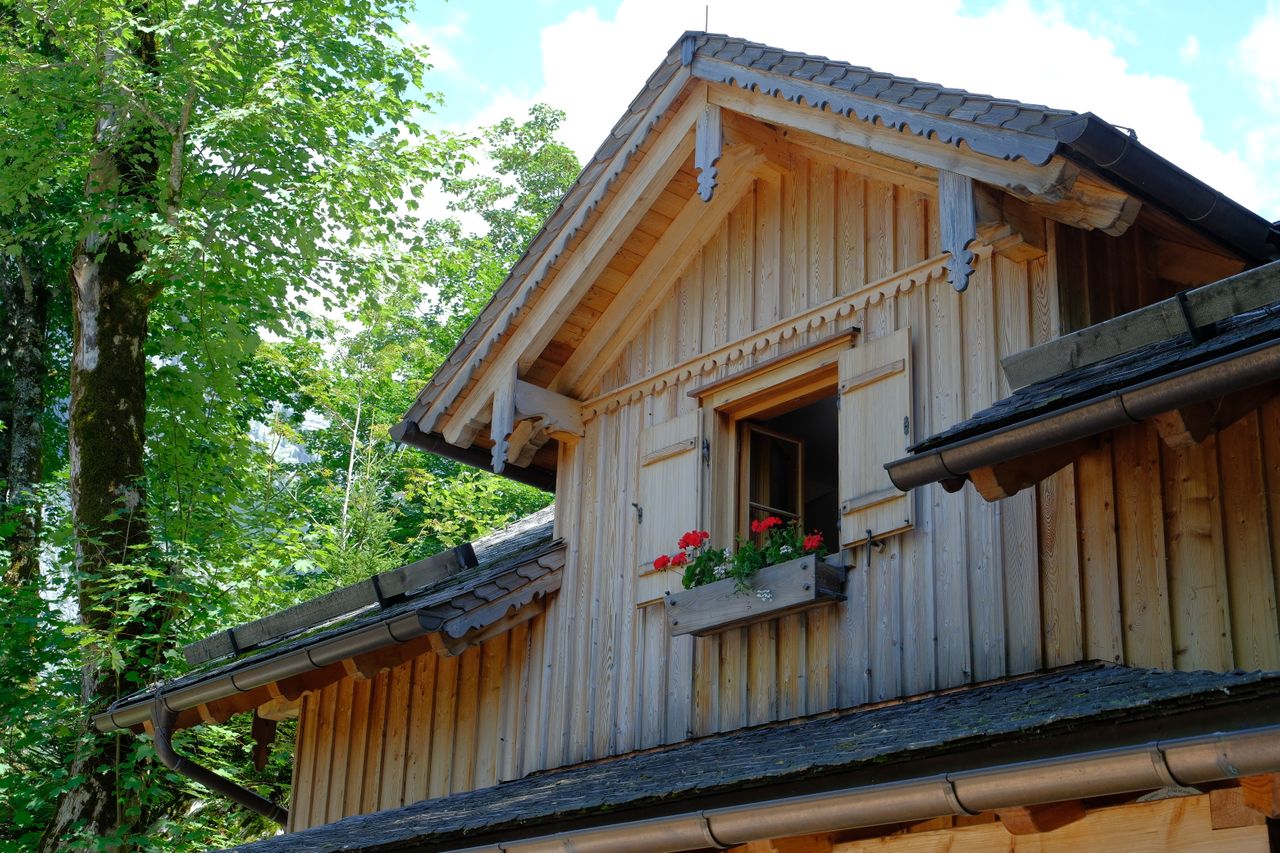
If your house sits beneath tall Douglas firs, cedars or bigleaf maples, you probably already know what your gutters are up against. Big trees are one of the best things about living in Nanaimo. They give shade and privacy and make a property feel settled. They also drop a steady stream of needles, leaves, cones, seeds and twigs onto your roof, and most of it ends up in the gutters.
The usual advice to clean gutters twice a year works for homes with a few small trees nearby. For houses under a mature canopy, it often isn’t enough. Here’s how to work out the right schedule for your property, what signs to watch for between cleanings, and why regular Nanaimo gutter cleaning matters more on the coast than in many other places.
Why Big Trees Change the Schedule
A gutter’s only job is to carry rainwater off the roof and away from the house. Once debris builds up, water backs up and spills over the edge, or sits in the trough and adds weight to the brackets. On Vancouver Island, where fall and winter can bring weeks of steady rain, a clogged gutter can overflow day after day.
Large trees affect gutters in three ways:
- Volume: A mature tree drops far more material than a young one, and a roof beneath several big trees can collect a surprising amount in a single storm.
- Timing: Different species shed at different times, so a property with a mix of trees may never really have a “quiet” season.
- Shade and moisture: Heavy shade keeps roofs damp, which encourages moss. As moss grows and breaks down, it washes into the gutters along with shingle granules and forms a dense sludge that blocks downspouts.
What’s Falling Into Your Gutters, and When
It helps to know what’s overhead, because each type of tree creates its own problem.
- Douglas fir: Firs shed needles throughout the year, with heavier drops after windstorms. The needles are small enough to slip past many gutter guards and pack tightly into downspouts.
- Western red cedar: Cedars shed flat sprays of foliage, mostly in the fall. These mat together when wet, forming a layer that stops water flowing freely.
- Bigleaf maple and other deciduous trees: Big, heavy leaves arrive all at once in autumn and can fill a gutter within days. In spring, maples also drop seeds and flower clusters.
- Arbutus: Arbutus trees shed older leaves and bark in early summer rather than fall, which surprises many homeowners who cleaned their gutters in spring.
- Red alder and cottonwood: Catkins, seeds and fluff in spring can mix with rain to form a thick paste in gutters and downspouts.
A property with only deciduous trees has predictable peaks. One with firs and cedars sheds all year. One with a mix of species may need attention in nearly every season.
A Practical Cleaning Schedule
Every property is different, but these guidelines are a good starting point:
- Few or no nearby trees: Once or twice a year, typically late fall and spring.
- Mostly deciduous trees overhead: At least twice a year, with the main cleaning after most leaves have dropped in late fall and a second in spring. Very large maples may call for an extra visit partway through leaf fall.
- Mostly evergreens overhead: Three to four times a year, because needle drop is constant and packed needles block downspouts easily.
- Mixed trees or heavy canopy directly over the roof: Every three months is often the safest option, particularly for homes with a history of overflows or leaks.
Timing matters as much as frequency. A cleaning in early October, before the big leaves fall, won’t help much by December. Most homeowners under large trees get the best results by booking one cleaning after the main leaf drop, usually in November, and another in spring once catkins, seeds and winter debris have come down. Where arbutus trees are nearby, an early summer check is worth adding.
Signs You Need a Cleaning Sooner
Even with a regular schedule, storms and seasonal changes can clog gutters faster than expected. Watch for:
- Water spilling over the gutter edge during rain, especially at corners
- Little or no water coming out of the downspouts during a heavy downpour
- Plants, grass or seedlings growing out of the gutters
- Gutters sagging or pulling away from the fascia
- Dark streaks or staining on siding beneath the gutters
- Pooling water or soil erosion near the foundation
- Dampness or leaks in the basement or crawl space
- Moss spreading along the roof edge
If you notice any of these, it’s better to have the gutters cleared right away rather than wait for the next scheduled visit.
What Happens When Gutters Stay Clogged
Clogged gutters can seem like a minor nuisance, but on a wet coastal property the damage adds up. Overflowing water can rot fascia boards and soffits, stain siding and wash away soil around the foundation. Over time, water pooling beside the house can find its way into basements and crawl spaces.
Standing water and wet debris also add weight. Gutters that are full of soaked needles and leaves can pull loose from their brackets, and in the rare cold snap, trapped water can freeze and put further strain on the system. Damp debris also creates a good environment for moss and insects.
Regular Nanaimo gutter cleaning costs far less than repairing rotten fascia, replacing a gutter run or dealing with water in the basement.
Do Gutter Guards Solve the Problem?
Gutter guards can reduce how often gutters need attention, particularly under deciduous trees whose large leaves sit on top of the guard and blow away. However, they aren’t maintenance-free.
Fir needles, cedar sprays and seeds can slip through or sit on top of many guard styles, and fine debris combined with moss and roof granules can form a mat over the surface. Guards also make it harder to see when the gutter underneath is filling up. Homes under big trees with gutter guards still need regular checks and cleaning; the schedule may just be a little less frequent.
Other Ways to Reduce Debris
A few steps can help reduce the load on your gutters between cleanings:
- Trim overhanging branches: Keeping limbs a few feet back from the roofline cuts down on debris and reduces moss by letting more light and air reach the roof. For large trees, hire an arborist and check local tree bylaws first.
- Deal with roof moss: Treating moss on the roof prevents it from breaking off and washing into the gutters.
- Check downspouts, not just troughs: A clear gutter won’t help if the downspout is blocked. Water should flow freely from the bottom during rain.
- Make sure water drains away: Downspouts should carry water well away from the foundation, using extensions or splash blocks where needed.
Why Professional Cleaning Makes Sense
Cleaning gutters under tall trees often means working on a ladder next to slippery, moss-covered roof edges, sometimes on a two-story house. Falls from ladders are a real risk, and damp coastal conditions make it worse. A professional crew brings the right equipment, clears the gutters and downspouts completely, and can spot problems such as loose brackets, leaking seams or moss buildup before they turn into repairs.
Keep Your Gutters Flowing With Green Tech Property Care
At Green Tech Property Care, we understand how quickly Vancouver Island’s big trees and wet weather can overwhelm a gutter system. Our Nanaimo gutter cleaning service clears the gutters and downspouts completely, tests the water flow, and washes the gutter exteriors so they look as good as they work.
We use soft washing and biodegradable cleaning agents that are safe for your family, pets and gardens, and we can treat roof moss at the same visit so less of it ends up in your gutters. We’re based in Nanaimo and also serve Parksville, Ladysmith, Lantzville, Duncan and Qualicum Beach.
Add Comment